The hidden time cost of photo sharing in early childhood classrooms (2025 insights)
2025 data shows how much time teachers lose on photo sharing and why schools are rethinking their communication tools for GDPR, workflow simplicity, and teacher wellbeing.

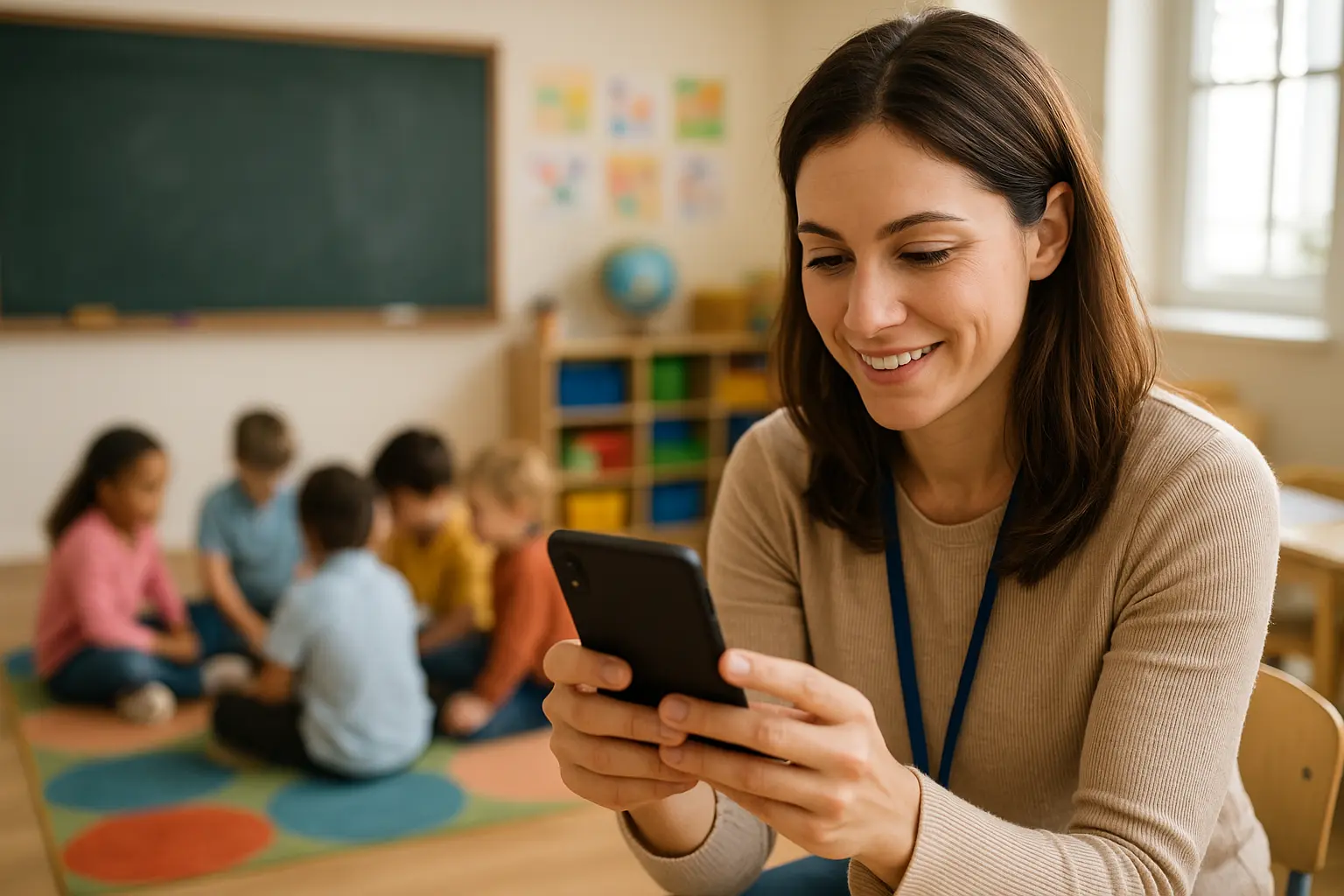
1. Why classroom photos take much longer than parents think
As a parent, I always enjoyed receiving classroom photos — those small windows into my daughter’s day that make you feel instantly connected. But when she started preschool, I began to see how these photos actually happen behind the scenes. They don’t appear by magic. Someone spends real time taking them, sorting them, editing them, and making sure they can be shared safely.
While building Kiddoz and talking with teachers, we realised how big this hidden workload was. Photo sharing isn’t a simple tap. It is a flow of small tasks that, when combined, create one of the biggest time drains in early-childhood classrooms. Teachers have been complaining about slow apps, endless scrolling, checking who appears in each photo, repeating captions, re-uploading after errors. When we added everything up, the numbers were striking: between 15 and 45 minutes of lost time every single day.
According to a 2018 study, several schools were demanding that teachers include photographs in end-of-year student reports, with individual reports reaching up to 12 pages in length. This requirement, combined with in-depth marking of student workbooks, has become an “unmanageable” workload burden for educators. Things are worse in 2025.
For me as a parent, this was surprising and as an engineer, it felt unnecessary and a bug. For anyone who cares about education, it’s easy to understand why teachers feel the pressure. These minutes add up into full weeks of extra work each year, taken away from the classroom and from the children.
2. GDPR turns photo sharing into a careful, manual process
The more we listened to educators, the more we understood how much GDPR shapes their daily routine. Parents want schools to be careful with personal data — and they absolutely should. But in practice, the responsibility lands heavily on teachers. One child walking in the background can turn a relaxed moment of sharing into a careful task of cropping, checking consent, and re-uploading.
I remember waiting two days for an update from our daughter’s class. The teacher told us later she had the photos ready, but the process of sorting them safely took too long. Not because she didn’t want to share, but because the tools kept slowing her down.
Most schools are still relying on communication channels that were never designed for early-childhood settings: WhatsApp groups, email attachments, generic school platforms that feel old or fail at the wrong moment. We covered this in more depth in our article on why many schools are rethinking their communication tools in 2026. These tools interrupt the rhythm of the classroom and push teachers into administrative work when they should be with the children. It becomes an emotional load too — trying to keep families informed, while also staying compliant, while also managing a classroom.
According to Data Protection Commission Ireland, photography in schools has become one of the most complex data protection challenges under GDPR. Schools operate differently from parents and must comply with stringent data protection obligations. Several key compliance requirements create substantial administrative overhead
3. Modern school apps should give time back — not take it away
When technology is designed with real classroom conditions in mind, everything changes. The camera opens immediately, photos organise themselves, the right parents are notified, and GDPR rules are applied quietly in the background. The process becomes something light — almost invisible — instead of something that eats half an hour of the teacher’s day. You can see what this looks like in practice on our How Kiddoz Works page.
This is exactly why we’re building Kiddoz. Not to digitalise everything, but to remove work that shouldn’t exist in the first place. Teachers should be able to share moments easily and safely, without losing their break or their preparation time. Parents should still get the small daily stories that make them feel close to their child. And schools should feel confident that communication happens in a secure, compliant, modern space. You can learn more about this on our For Schools page.
If we can reduce those 45 minutes to five, then the benefit isn’t only efficiency. It is giving teachers a bit more air in their day, a calmer rhythm, and more time to be present with the children. In early-childhood education, that extra space might be the most valuable thing we can offer.
If you want to experience this workflow yourself, try the instant demo.